
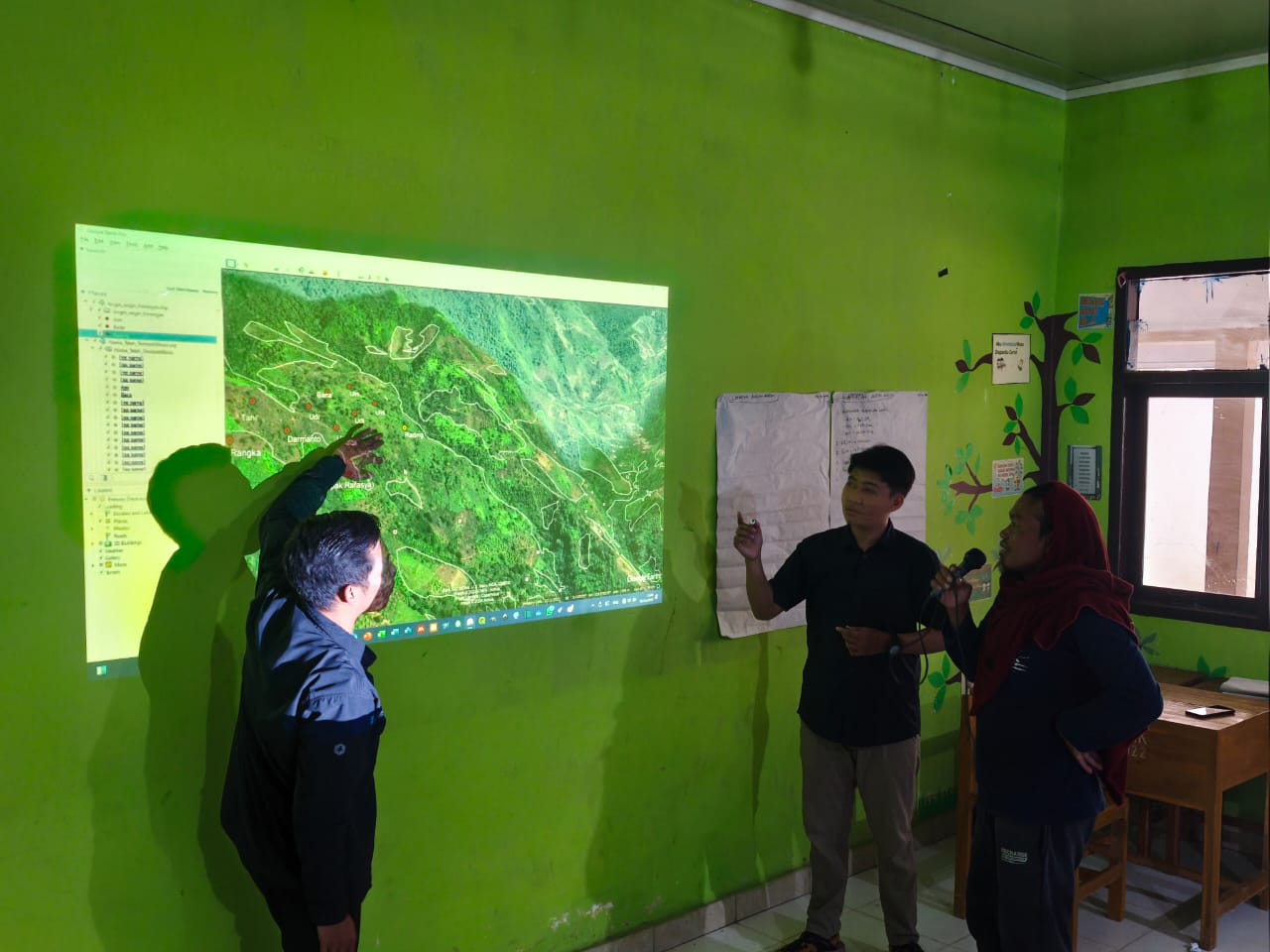

Taora Village, Buntu Malangka, Mamasa Regency, West Sulawesi — 29 December 2024
A healthy forest can also be a living economy — but only if the people who care for it can sell what they produce. Through the Forest Programme IV field school, members of the Lestari Forest Farmers' Group (KTH Lestari) had already learned to make three environmentally friendly products: liquid organic fertiliser (POC), compost, and local micro-organism solutions (MOL). The next challenge was turning those products into income.
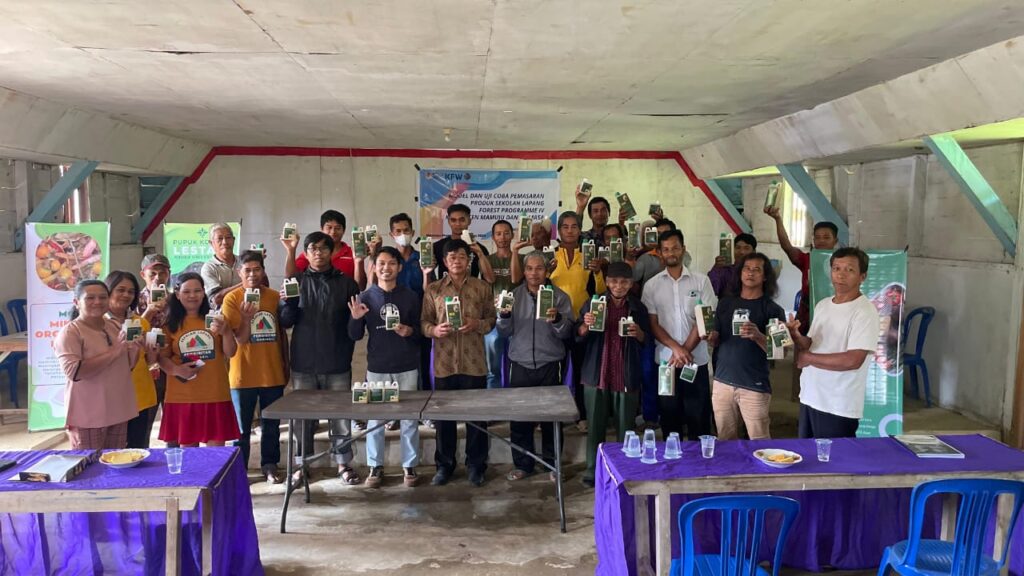
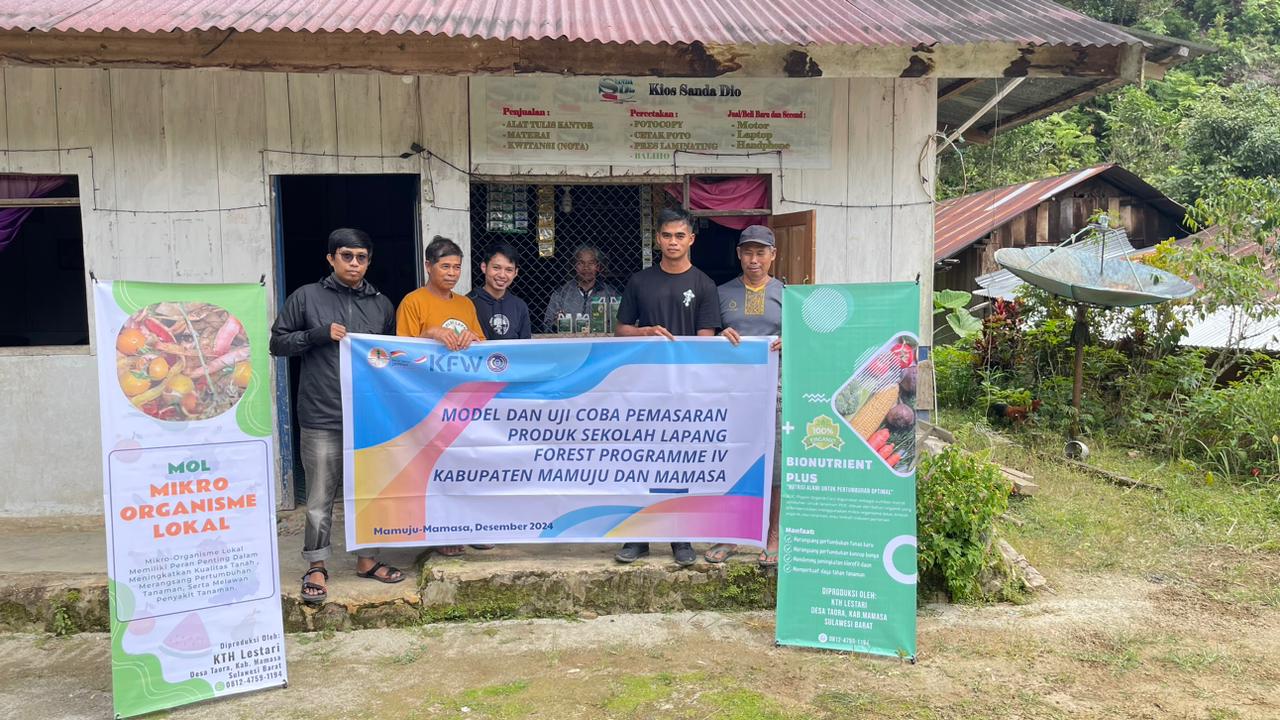
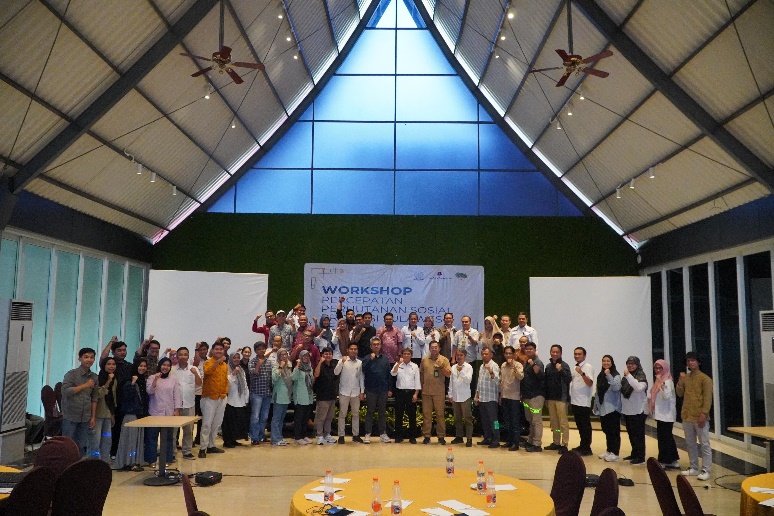
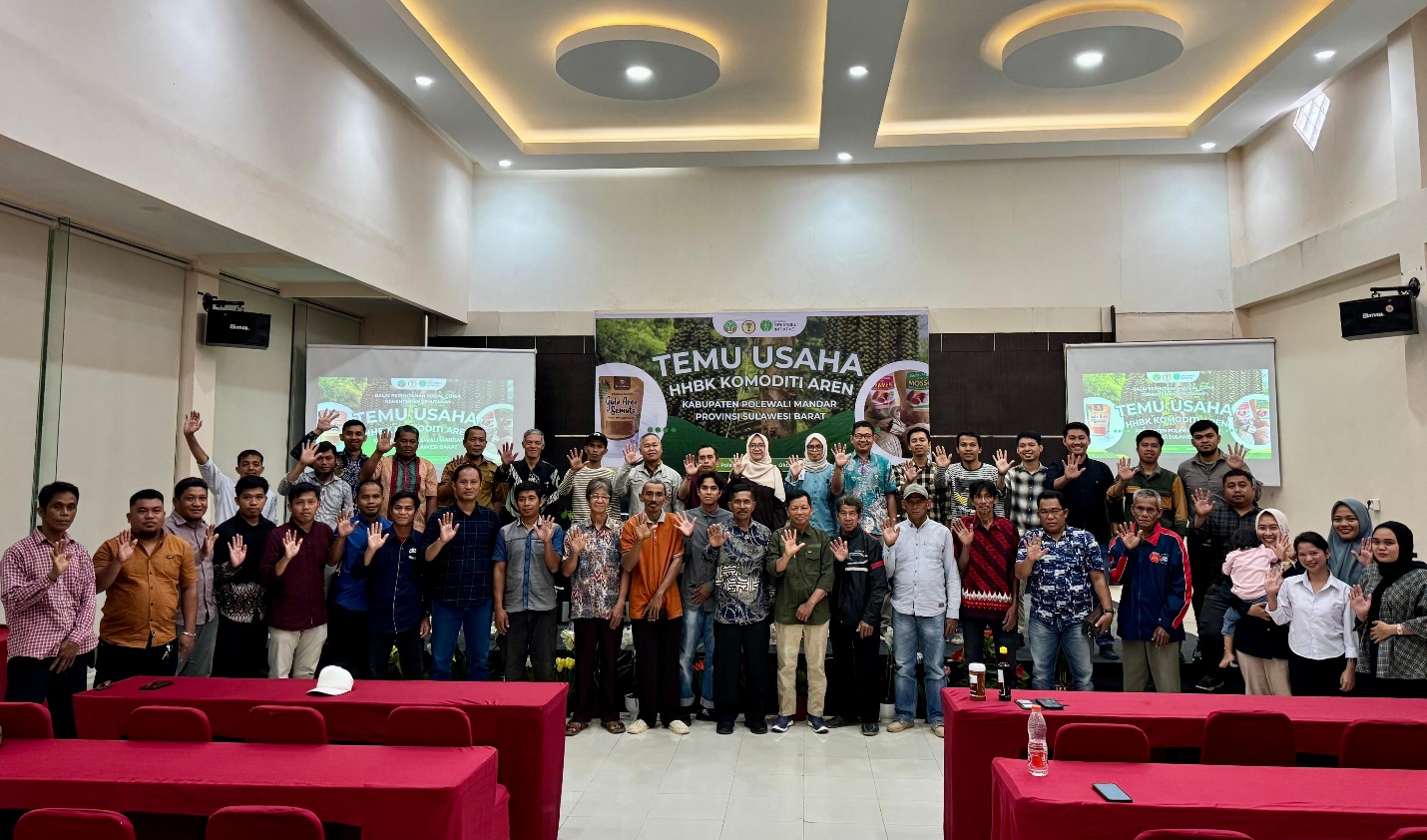
That was the focus of a marketing model and trial run by the Research and Community Service Institute (LPPM) of Universitas Muhammadiyah Pare-pare, in partnership with Yayasan Sabuk Hijau Indonesia (Greenbelt Initiative), held in Taora Village on 29 December 2024.
Rather than a lecture, the day was built around learning by doing, in three stages:
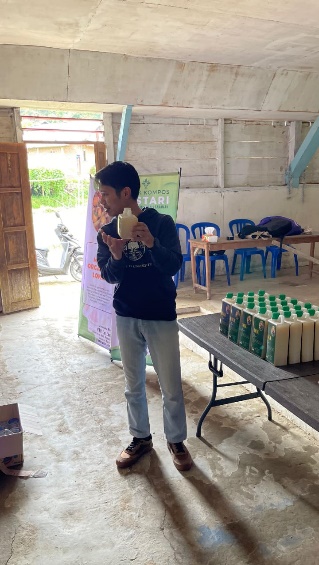
- Reading the market — a group discussion to analyse opportunities and identify the barriers farmers face when selling non-timber forest products.
- Hands-on practice — creating social-media promotion content, designing product labels, and setting competitive prices, followed by a real direct-sales simulation.
- Monitoring and evaluation — measuring how effectively participants could apply their new marketing skills.
The group then took their learning into the field, visiting shops and sales points around Taora to observe real customer behaviour and spot untapped market potential.
The result is a forest-based enterprise that stands on its own. By combining the strengths of a university, a facilitating partner and the community itself, KTH Lestari now understands how to make their products competitive — and how to keep the benefits flowing back to the people who live alongside the forest. It is a model designed to be replicated by other social-forestry farmer groups across the region.


Leave A Comment